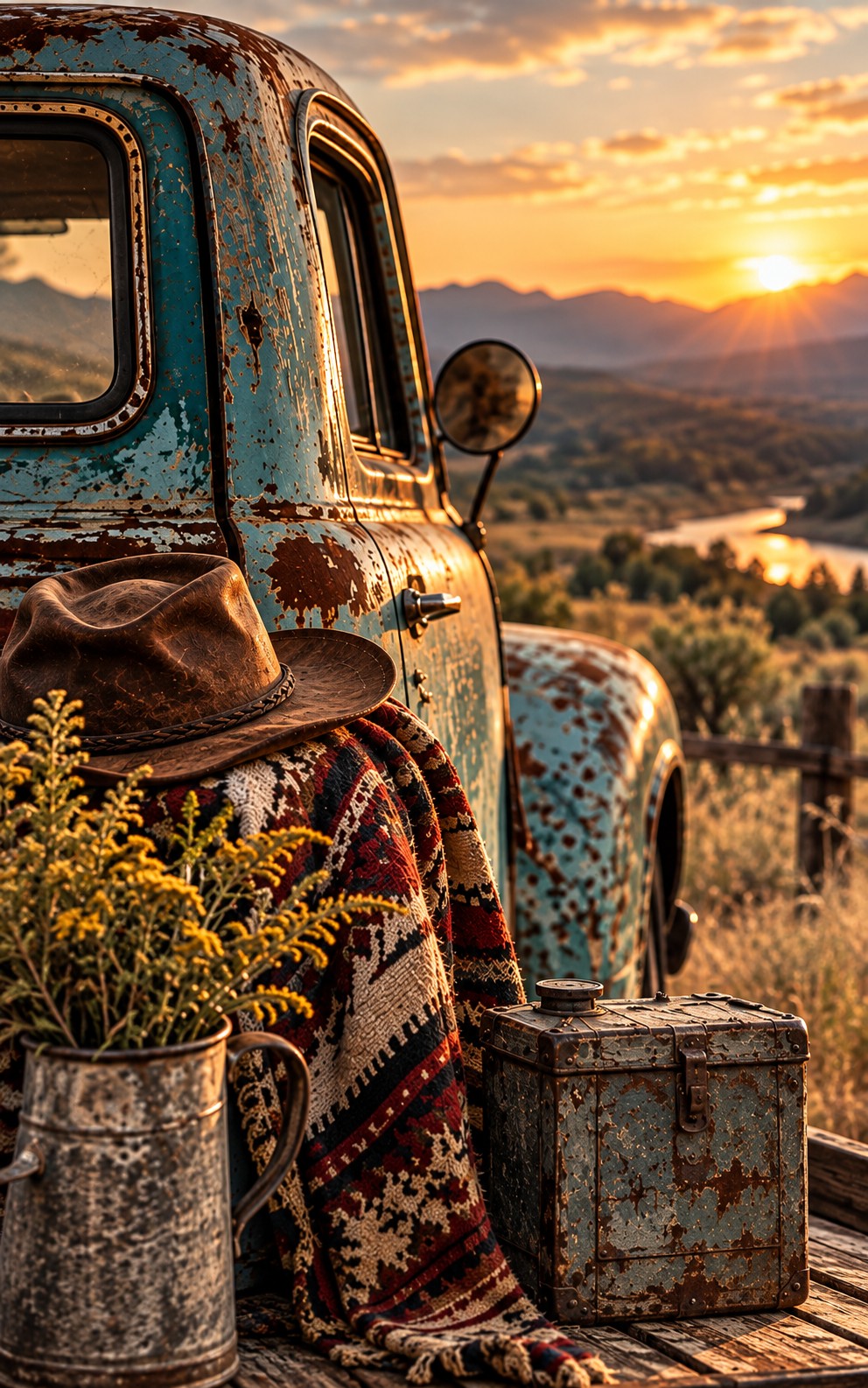
There are certain things I can look at and immediately feel drawn to, and more often than not, it is because time has had a hand in them. A piece of metal that has rusted unevenly, copper that has darkened and changed color, wood that has been touched so many times the edges have softened, leather that has creased and deepened in tone, fabric that has faded naturally in the sun. I simply adore what age does to things.
To me, patina is not damage. It is evidence that something has existed in the world long enough to be changed by it, and that change can be incredibly beautiful.
What Is Patina?
Patina is the visible change that develops on a material over time through age, exposure, use, oxidation, weather, handling and wear. Depending on the material, that change might appear as darkening, fading, tarnish, rust, softened edges, scratches, discoloration or a surface that has simply become richer and more complex with time.
What makes true patina so interesting is that it cannot really be separated from the life of the object itself. You can imitate age, distress wood, chemically oxidize metal, sand through a painted surface or manufacture something to look weathered, and sometimes those treatments can be beautiful in their own way. But naturally developed patina is different because something actually happened to create it.
Someone handled it, used it, left it outside, carried it, repaired it, exposed it to weather or sunlight, and over time the material changed in ways that could never be exactly repeated.
That is what makes it feel real.
Age Changes Materials in Their Own Language
One of the things I find most fascinating about patina is that every material ages differently, almost as if each one has its own language.
Metal may rust, tarnish or oxidize, and depending on the material, that transformation can be extraordinarily beautiful. Copper can move from bright orange to deep brown and eventually into shades of green and blue. Iron can develop layers of rust that shift from red to brown to nearly black, while brass tends to soften and darken, especially in the places where it has been handled repeatedly.
Wood tells an entirely different story. It may fade in sunlight, darken from the oils in a hand, wear smooth around the edges, crack slightly with age or develop variations in tone that become more interesting the longer the piece exists. Old wooden railings are one of my favorite examples because you can sometimes see exactly where generations of hands have moved across the same surface. The wood becomes smoother in those places, and that wear is inseparable from the people who created it.
Leather may be even more personal. A pair of boots forms around the person wearing them, a bag darkens where it is carried, and a chair develops creases and changes in tone according to how it was used. The material begins to record the relationship between the object and the person living with it.
I think that is extraordinary.
The Difference Between Patina and Neglect
Loving patina does not mean believing every old, rusty or damaged object should be preserved exactly as it is. There is a very real difference between the character that comes from age and deterioration that compromises the object itself.
A surface worn smooth by decades of use may be beautiful, while rot can mean a piece is no longer structurally sound. Tarnish can add depth to metal, while active corrosion can eventually destroy it. Faded paint may tell a wonderful story, but peeling paint containing lead requires a completely different kind of care.
That distinction matters because preservation is not always the same thing as leaving something untouched. Sometimes the right choice is to leave a surface alone. Sometimes it needs careful cleaning, stabilization or repair so the object can continue to be used without stripping away everything that made it interesting in the first place.
That balance has always mattered to me. I am not especially interested in making old things look new. I am much more interested in allowing them to continue being themselves.
We Have Been Taught to Remove the Evidence
For a long time, we have been conditioned to value things that look untouched. No scratches, no fading, no tarnish, no rust, no visible evidence that anyone has ever used them.
There is certainly a place for pristine condition, especially with some collectible objects, but I think we lose something when perfection becomes the only definition of beauty. A flawless surface may tell you very little, while a worn surface can reveal exactly how an object has moved through the world.
The darkened area on a brass handle may show where someone placed their fingers every day. A faded section of textile may reveal which side faced the window. A small dent might be the result of decades of use rather than carelessness.
Those details create individuality.
Two objects may have begun life looking nearly identical, but after fifty years they rarely do anymore. The life around them has changed them.
Why Natural Patina Feels Different
There is something about natural patina that the eye recognizes, even when we cannot immediately explain what we are seeing. Real wear tends to be inconsistent, and that irregularity is part of what makes it believable.
One side fades more than another. A particular edge becomes smoother. Rust develops where water repeatedly collected. Leather darkens where it was touched most often. Wood changes differently depending on where it sat in a room or how people interacted with it.
Those variations are difficult to reproduce perfectly because life itself is not uniform.
I think this is one of the reasons I am so drawn to materials that age well. They do not simply deteriorate; they evolve. Good leather becomes richer with use, solid wood develops depth, copper transforms, stone softens around the edges, wool relaxes and paper changes in tone and texture as it gets older.
The material continues participating in the life of the object.
Patina Can Hold Memory
There is another layer to patina that has very little to do with surface appearance, and that is memory.
When you inherit something from another person, some of the wear on it may be theirs. The smooth place on a tool handle may have been created by your grandfather's hand. The worn corner of a table may be where someone sat for decades. A leather bag may have traveled thousands of miles before it ever became yours.
Those visible changes connect the object to the people who used it before you, and I think we feel that connection even when we do not know every detail of the story.
At the same time, we are not only receiving history. We are adding to it.
Every time we use an object, we become part of what happens to it next. The boots we wear today will crease differently because they are ours. The table our family gathers around will acquire marks that did not exist before us. A copper pan may continue to change color for generations.
In that sense, patina is still being written.
Not Everything Needs to Be Restored
One of the quickest ways to remove the character from an old object is to over-restore it, and I think this happens because people often see age and assume it needs to be corrected.
Sometimes a piece does need significant restoration, but sometimes it simply needs understanding.
Before changing an old surface, it is worth asking what you are actually looking at. Is this dirt, or is this oxidation? Is this damage, or is this wear? Is the finish failing, or has it simply mellowed with age? Will cleaning the piece reveal it, or will it erase part of what makes it special?
Those are very different questions, and the answers can change what should happen next.
There is a kind of restraint required when dealing with old things. Knowing when not to change something is a skill too.
This Is Why Materials Matter at Futurology
Patina is one of the reasons material matters so much to me. I am drawn to things that can age rather than simply wear out, especially materials such as wood, leather, iron, copper, brass, wool, linen, stone and paper.
These materials change over time, and in many cases they become more interesting because of those changes. That is very different from an object that simply looks worse until it is discarded.
At Futurology, we are interested in things that have already lived a little, but we are just as interested in things made today that have the potential to age beautifully. That is part of what Curated for a Life Well Made means to me.
It is not only about how something looks the day you bring it home. It is also about what that object might become after ten years, twenty years or fifty. Will it carry use well? Will it develop character? Will someone still want it when it no longer looks new?
Those questions matter.
The Beauty Is in the Evidence
I think the thing I love most about patina is that it is honest. It reminds us that nothing stays untouched, and perhaps it should not.
Materials change, objects change, homes change and we change right along with them. Rather than seeing every sign of age as something that needs to be hidden or corrected, I think there is real beauty in allowing some of that evidence to remain.
The rust, the fading, the worn edges, the softened leather, the darkened wood and the places where hands have been are all part of the same story. They tell us that something has lived.
And to me, that may be one of the most beautiful qualities an object can have.
Futurology
A Modern Mercantile | Curated for a Life Well Made.